EXAMPLES FROM PRACTICE

Different problems.
Different changes.

Two finance workflows show how AI can investigate and build improvements, and where exact software and finance judgement remain essential.

Finance workflow example

Invoice-to-accounting

The problem

Invoice data passed through a fragile macro-enabled Excel workbook before it could become an accounting-upload file. Rules were buried in formulas, settings and macro code, making inconsistencies difficult to spot and changes difficult to check.

How AI helps

AI did much of the investigation, design, development and testing, under finance-led direction and review. It traced the workbook’s rules, investigated discrepancies and helped build a tested replacement. This substantially reduced delivery cost compared with a conventional pre-AI project.

What changes for finance

A more robust, easier-to-use web application replaces the workbook. Configurable mappings, validation, exception review and reconciliation make accounting exports easier to prepare and check. Repeatable tests help catch errors when rules change. The application converts data using defined software rules, not AI.
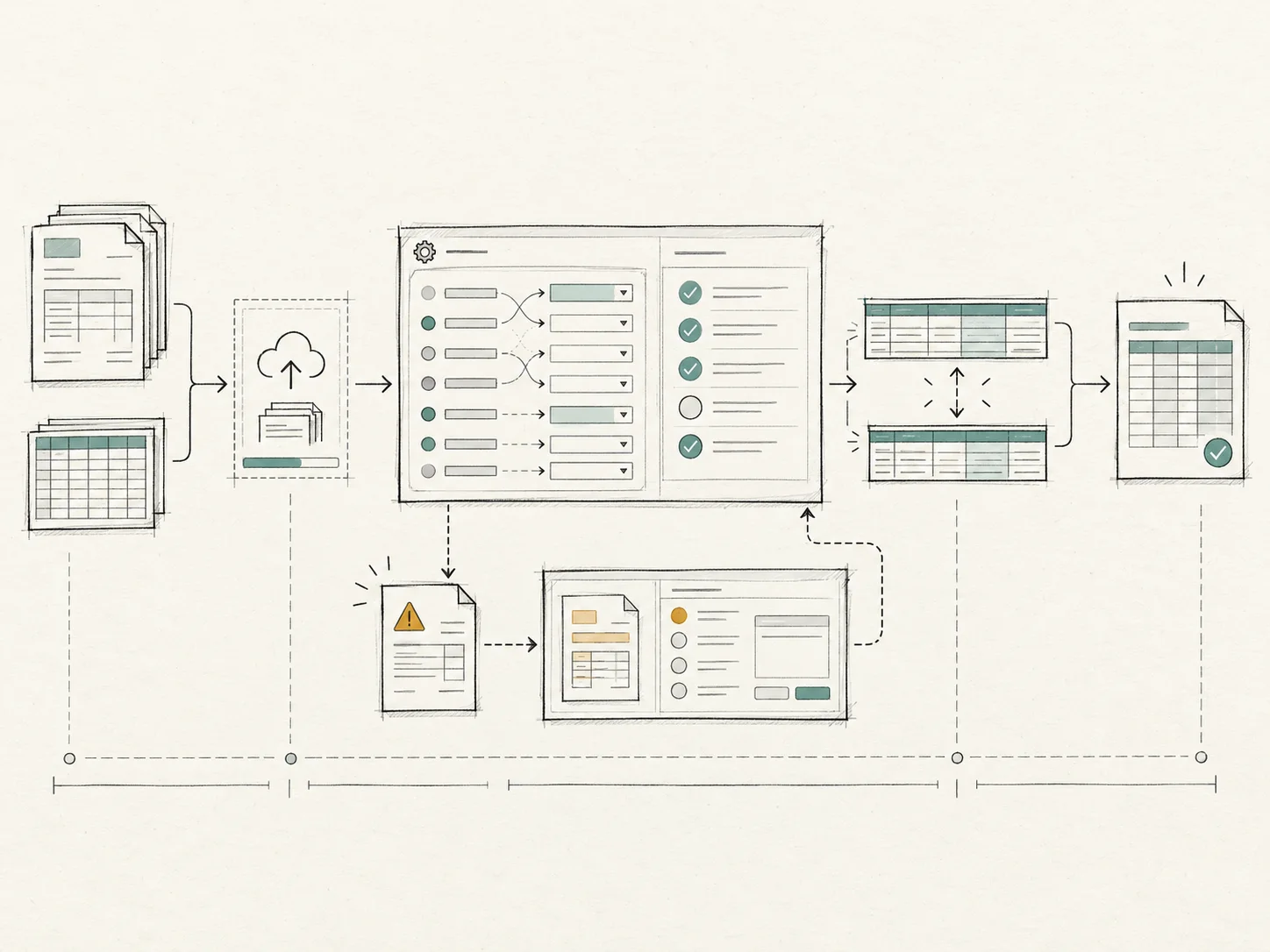
Invoice input, mappings, checks, exception review and accounting output
Illustrative workflow view; labels and explanation provide the accessible detail.

Finance workflow example

Intercompany netting and FX review

The problem

People had to gather intercompany balances and FX inputs from subsidiary finance, netting and banking systems, reconcile mismatches, investigate differences and assemble material for treasury review. The work was spread across handoffs, so the review started with preparation rather than a consolidated picture.

How AI helps

The workflow is redesigned around AI doing and coordinating most of the preparation—not just helping with individual steps. AI can collect data across systems, investigate mismatches and prepare treasury proposals with supporting evidence. It can also help analyse, design, build and test the solution.

What changes for finance

Treasury receives net positions, FX exposure, evidence and exceptions in one review. With AI handling preparation, the process could run daily rather than monthly. Treasury could choose when to hedge based on business needs and market conditions—not a monthly preparation timetable. Software calculates; finance decides and approves; people execute trades and postings.

Subsidiary balances are reconciled, grouped into net positions and residual FX exposure, then brought with evidence to human treasury review
Illustrative workflow view; labels and explanation provide the accessible detail.

Bring one process that should work better.

Describe the work, the difficulty and the result you want.

Discuss your process